The Biker Bucket List: North Africa to Dakar


João Sousa is a Solo Adventure Rider from Portugal who has travelled routes in more than 30 countries. He does what many of us only dream about – taking time away from the rat race to pursue the long road.
Along the way, those dreams can throw up many tough challenges and here he takes us through a photo essay of the African leg of his last trip - a 10,000 km adventure from Porto to Dakar and back to Porto. 20 intense days that, as well as featuring blistering heat also saw him tackling snow and ice and temperatures of -5° C.
Many people assume the only way to ‘do Dakar’ is by taking part in the legendary Dakar Rally. But it’s possible to make your own way there without engaging in a week of life-threatening motorised madness.
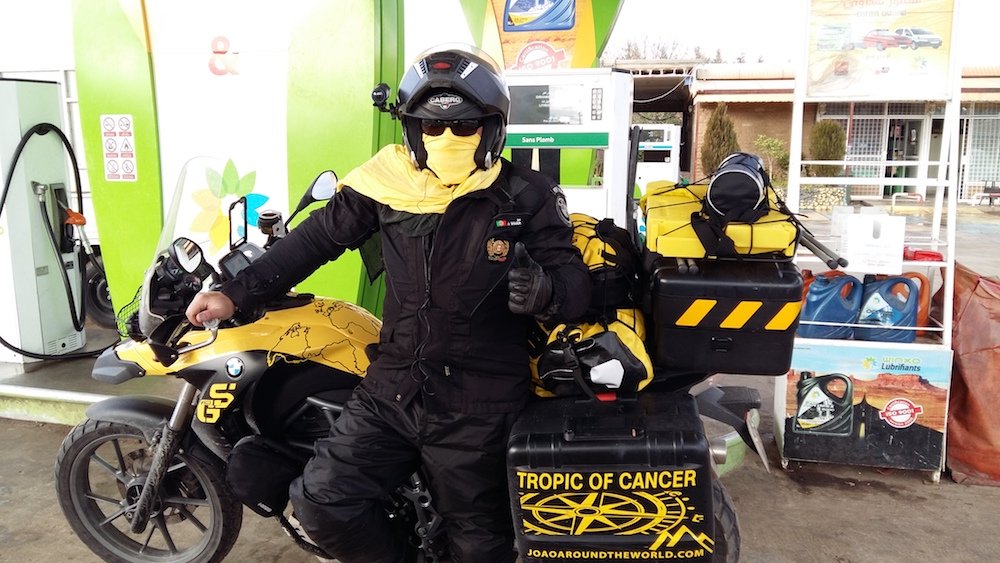 © João Sousa - Ready for whatever the Atlas Mountains can throw at me and the bike
After arriving in Morocco, my trusty 2013 BMW F 650 GS Twin (800cc) and I prepared to tackle the roads of the Great Atlas Mountains, the Western Sahara, Mauritania and Senegal.
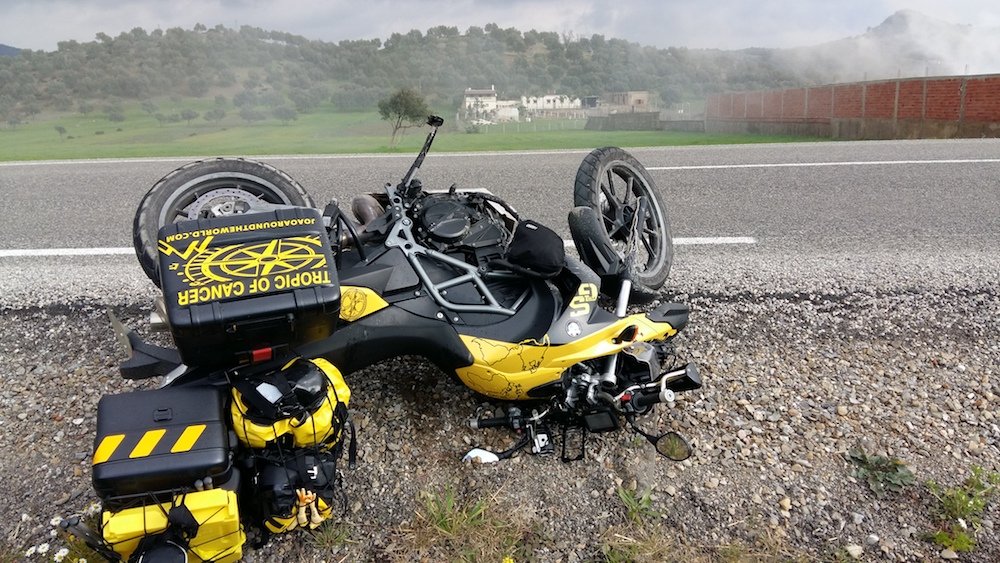 © João Sousa - No matter how experienced you are, sometimes you get it wrong
The trip was a challenge pretty much from the first few miles. Thanks to an ‘unscheduled dismount’ near the city of Fez I’d had to do the whole trip with pains in my left arm.
Advertisement
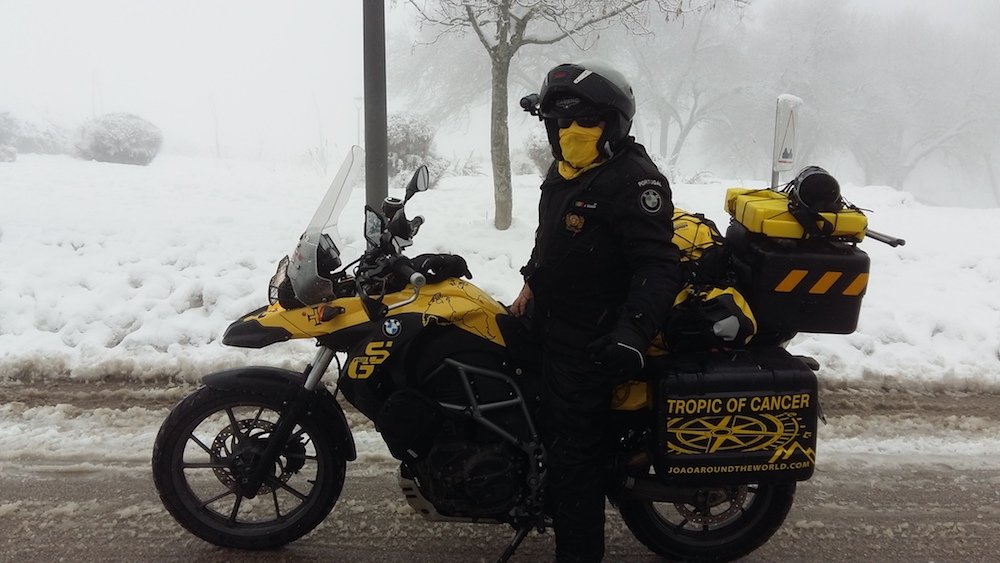 © João Sousa - Not what you were expecting from North Africa?
The next thing to deal with was the Great Atlas Mountains. Near Ifrane the temperature plummeted to -5° C, with snow and ice making the mountains both majestic, but at the same time treacherous on uneven roads.
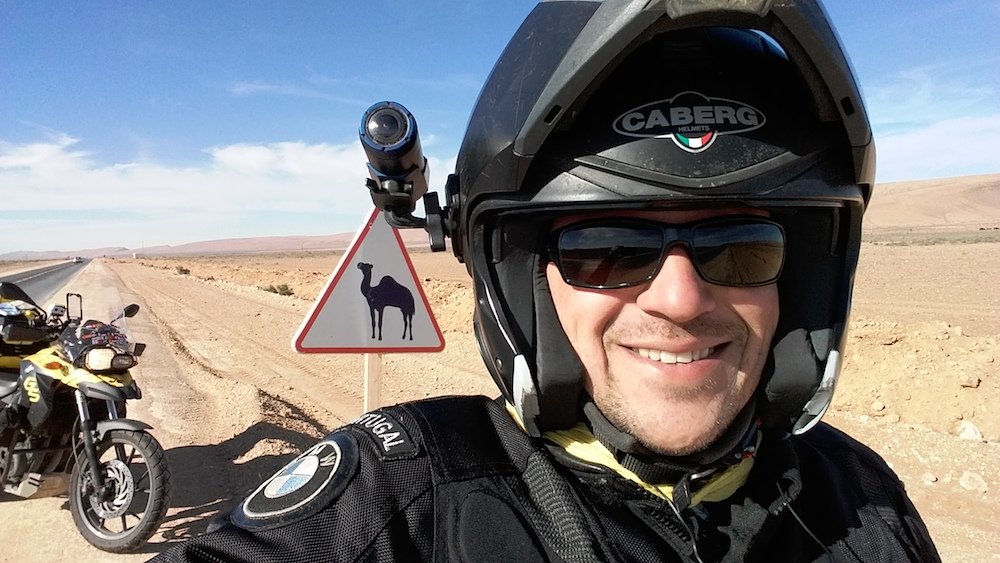 © João Sousa - From snow-capped mountains to baking plains
Heading south the temperature increased to the point where it reached 45° C in the western desert. On a motorcycle trip to Dakar your gear has to be able to cope with many extremes.
Advertisement
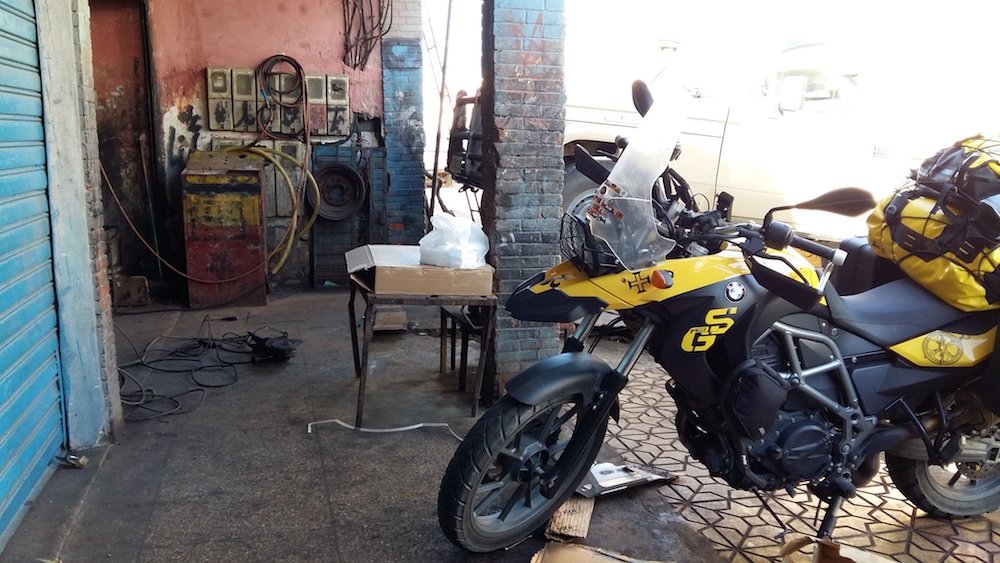 © João Sousa- You are going to get to know the mechanics of your bike quite intimately
Passage through the desert on degraded roads and undulating sand caused one of the seals of the right fork to fail, draining hydraulic oil on to the shims which in turn caused a lack of braking in the front wheel. Bike workshops rarely exist in the desert of Western Sahara, Mauritania and Senegal so I basically had to clean the scabbard every time I stopped to restock or eat. Not exactly relaxing…
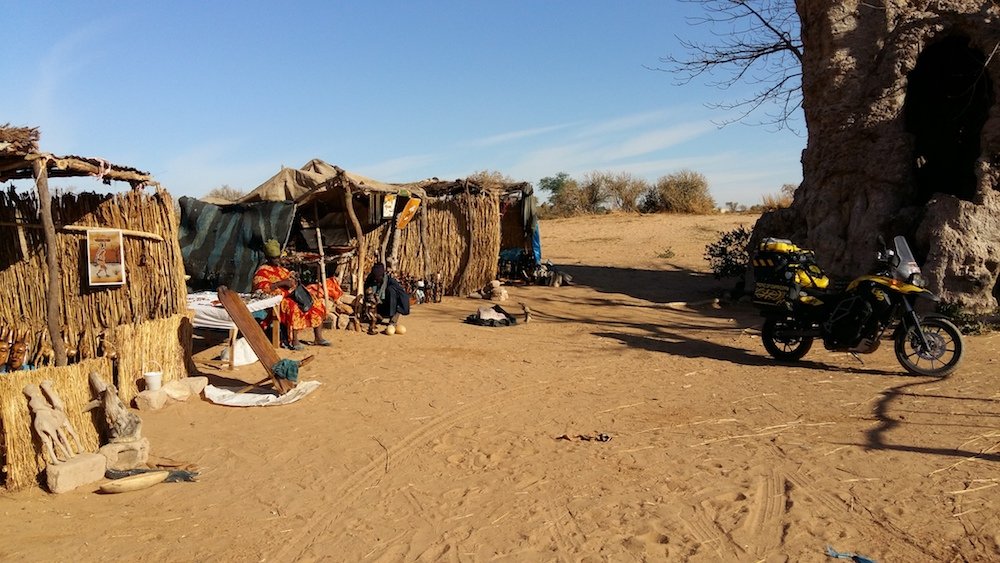 © João Sousa - You soon find the real Africa beyond the tourist areas
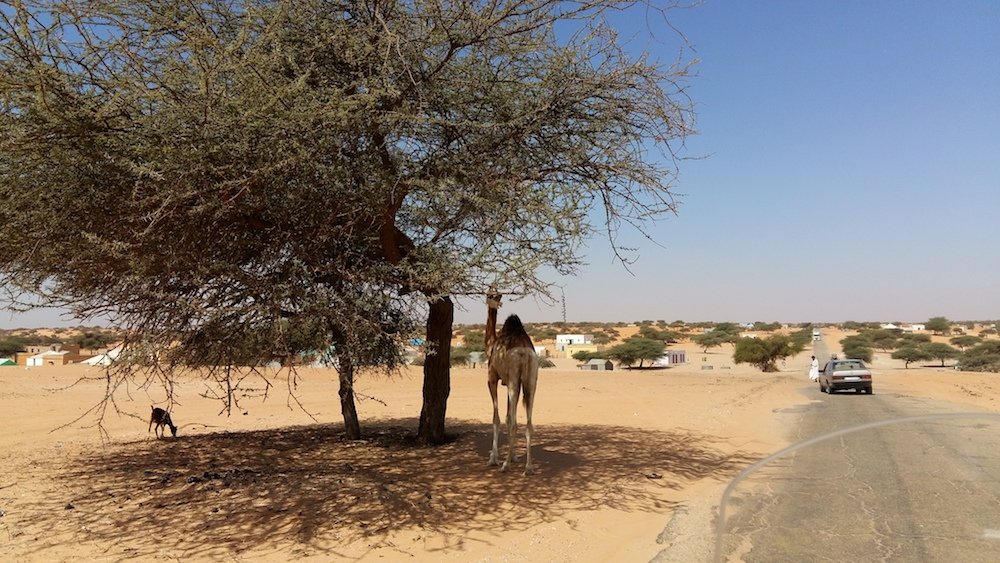 © João Sousa - Camels and shade: two precious commodities in Africa
I had many lunches in the middle of the desert with the camels, received fuel supplies in deposits of 20 Litres from the Berber tribes, and slept in places with extremely poor conditions.
Advertisement
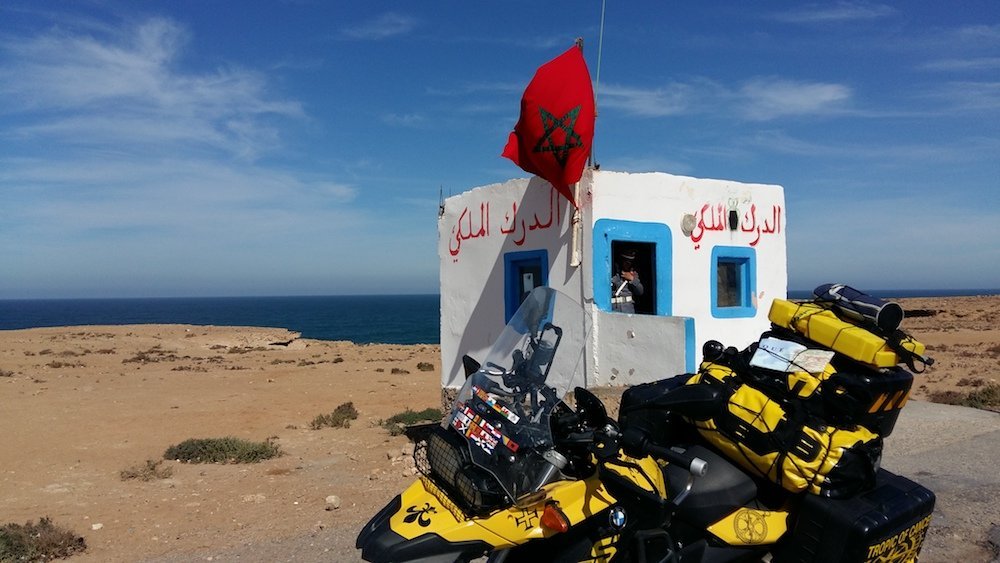 © João Sousa - Like death and taxes, police controls are guaranteed wherever you go
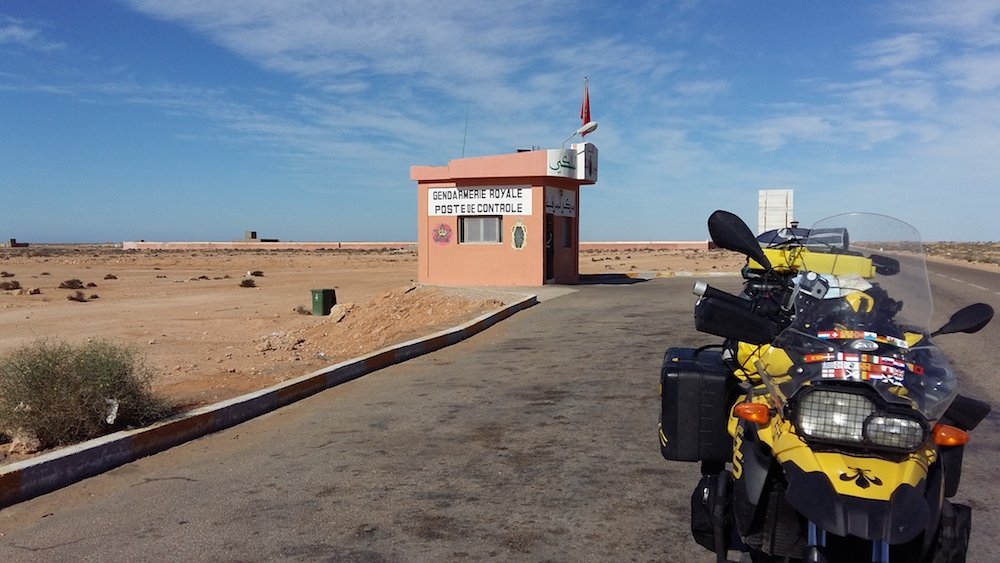 © João Sousa - And another
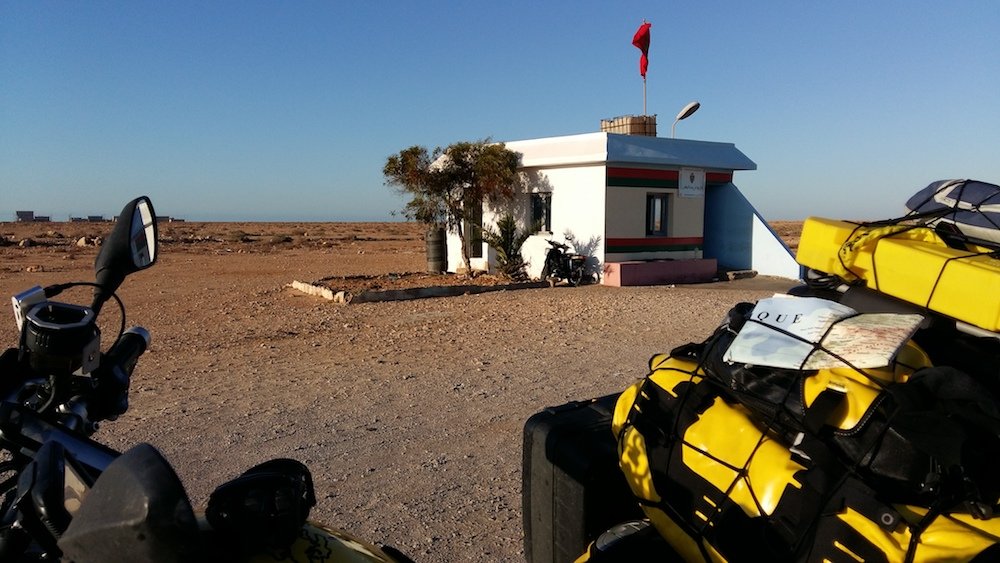 © João Sousa - And another…
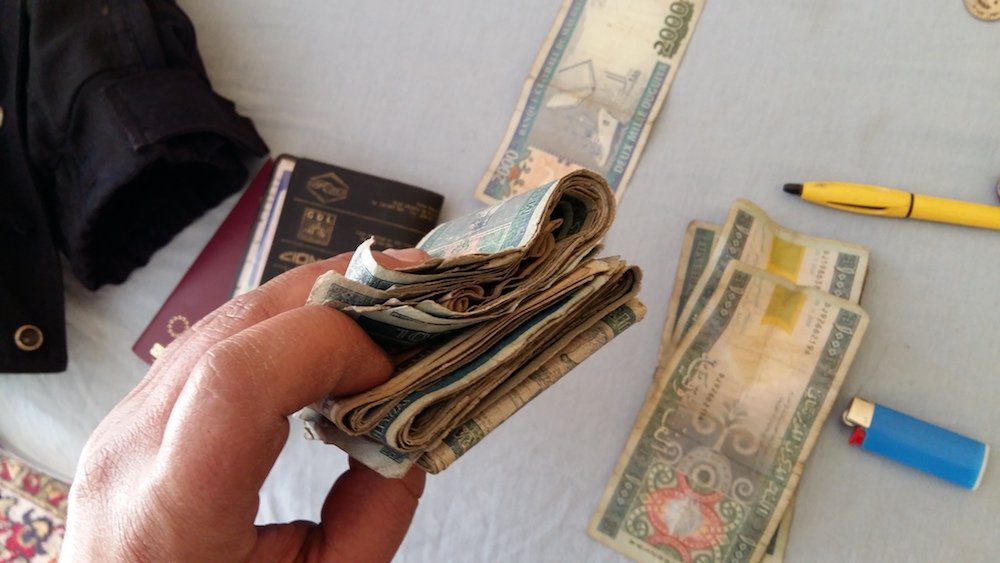 © João Sousa - And so you’ll need plenty of this…
I had to deal with a battalion of people at the borders: police, customs agents, money exchange personnel and border corruption. The borders in some African countries are not friendly places nor ones you feel like visiting…
Advertisement
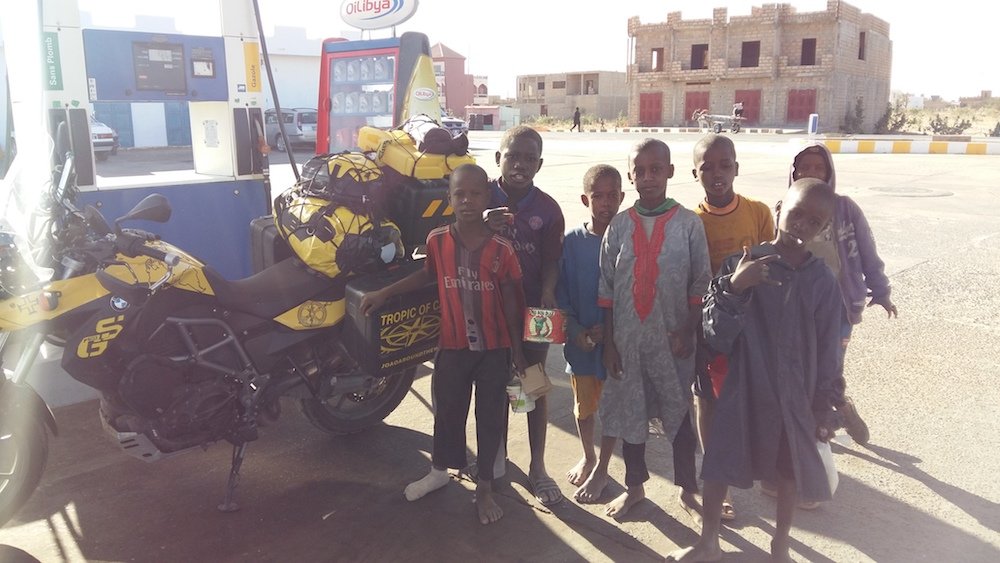 © João Sousa - You’ll be a subject of much interest to the locals - embrace it!
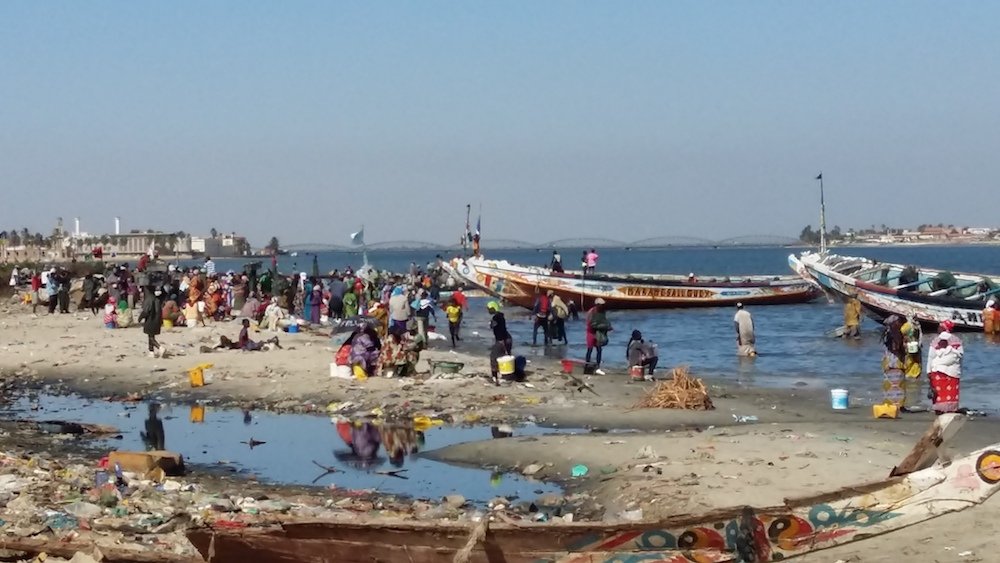 © João Sousa - You’ll also need to embrace more challenging aspects of Africa too
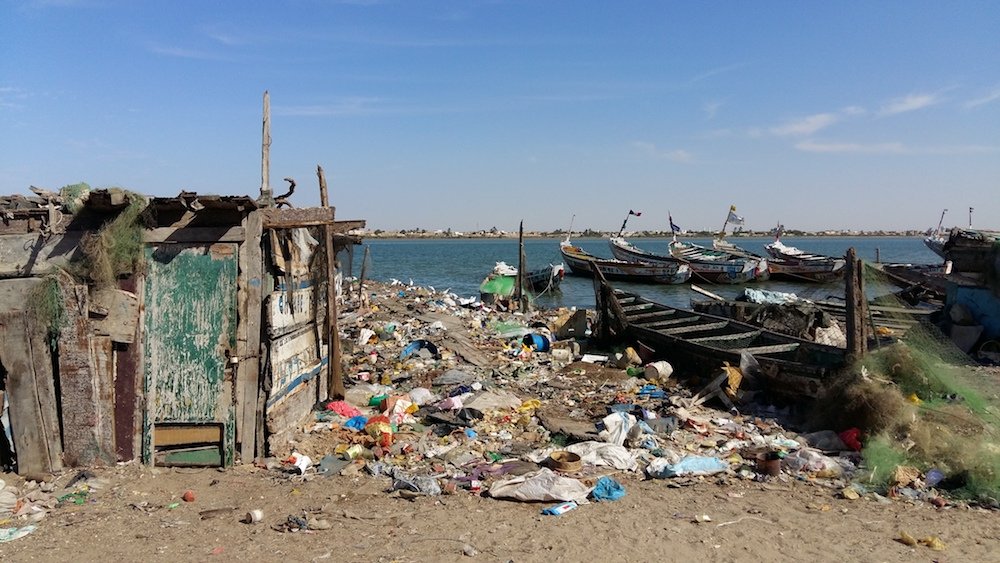 © João Sousa - Life is still very hard in many areas. But this is part of the reason for exploring this alternative life on the planet
Travelling through Africa is something that has to be done with humility, good communication, knowing how to respect culture, be assertive and considerate but never let down your guard.
Advertisement
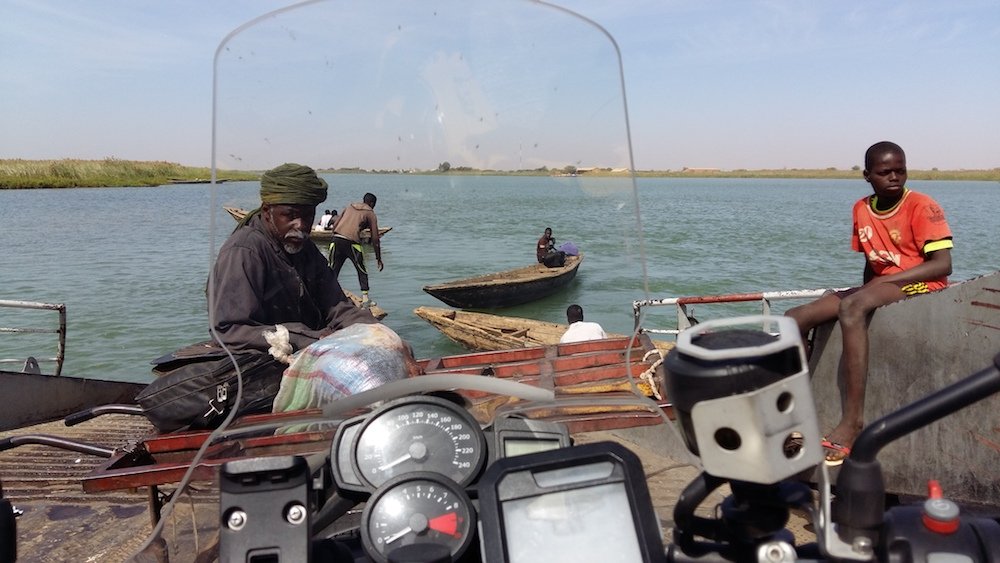 © João Sousa - Entry to Mauritania is by barge. Notice how my screen is still perfectly clear at this point
The passage from Mauritania to Senegal is made by a barge that makes the crossing 3 or 4 times a day and transports everything from trucks to carts with donkeys. On arrival in Senegal we move on to the second part of the episode and the whole process begins again. Everything changes as we descend through the country, the vegetation is less harsh, greener and the first baobabs begin to appear.
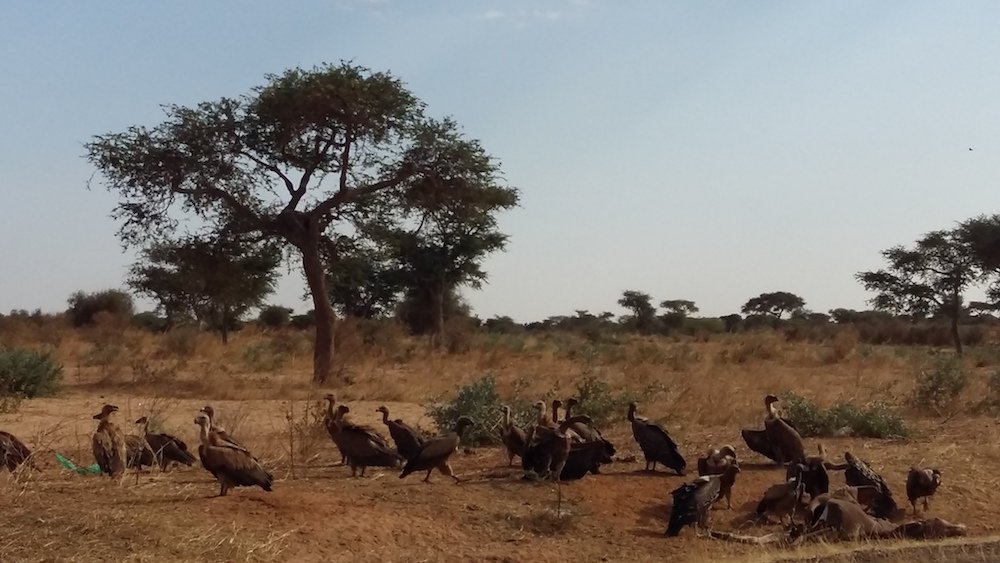 © João Sousa - The African wildlife I was expecting, vultures feed on a carcass
At one point I passed a 1.5 metre iguana along the side of the road, and later a bunch of vultures devouring a carcass of a cow. It was only then that I felt that I was really back in Africa.
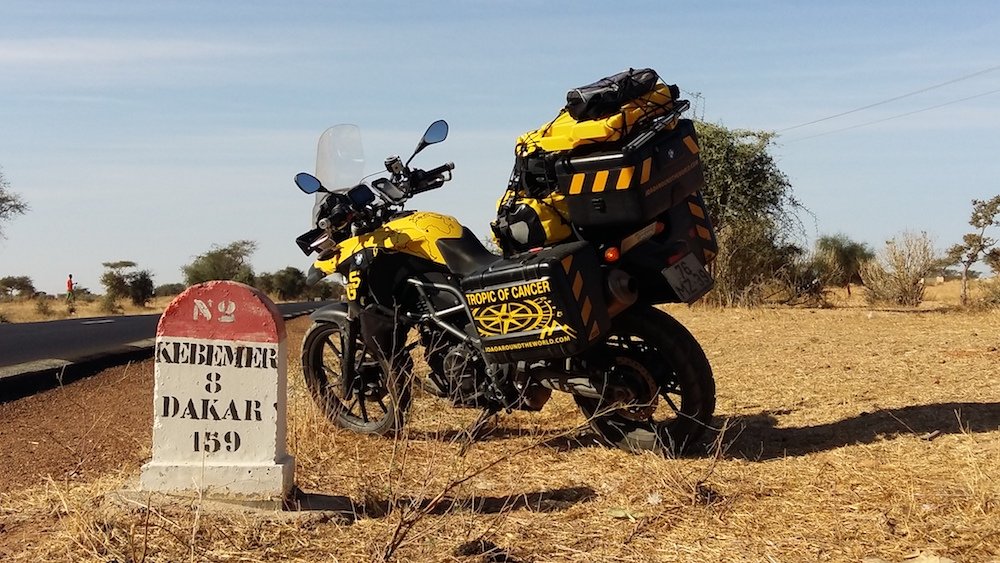 © João Sousa - Nearing the destination
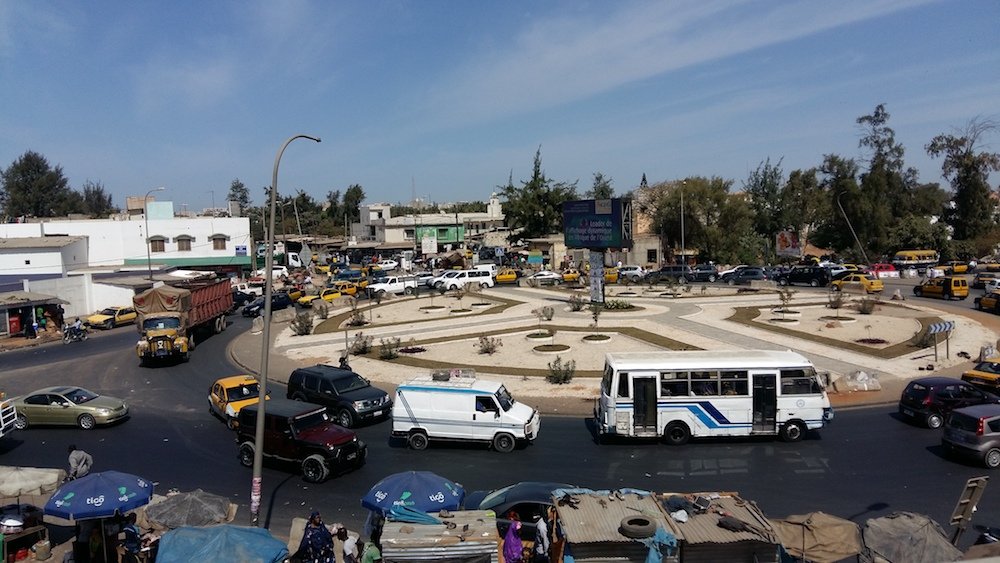 © João Sousa - The journey’s end point before heading back
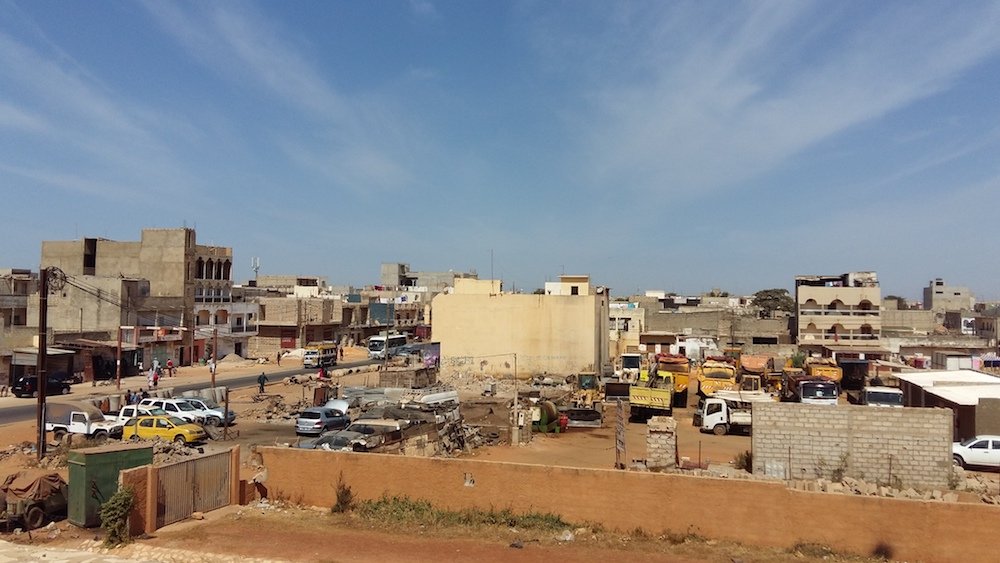
 © João Sousa - When the Rally isn’t around, Dakar is just another ordinary African town - but that is not the point of the journey, just the destination
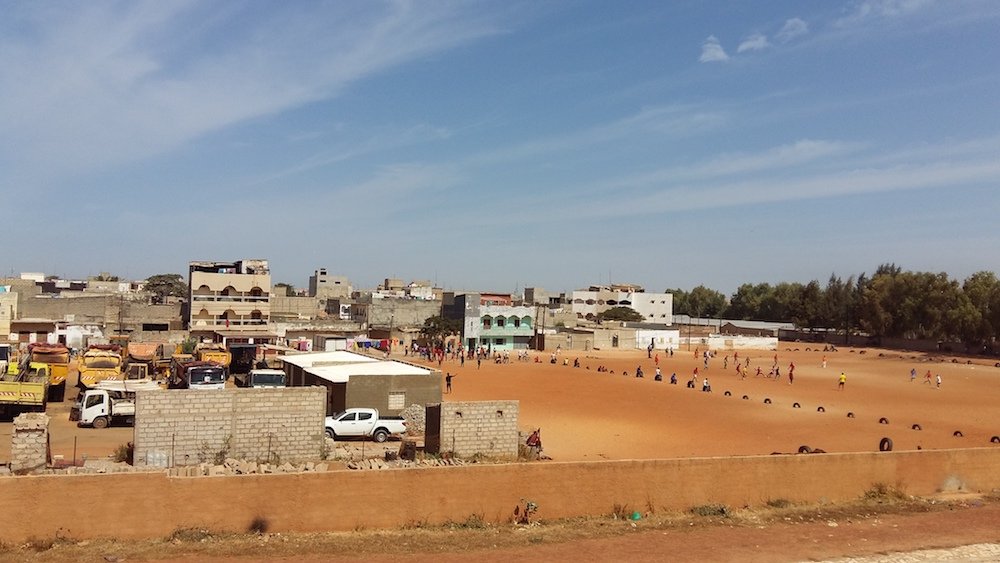
 © João Sousa
The arrival in Dakar was quite touching after all those miles and I finally managed to say, I had arrived! The movement in the streets and the chaotic traffic made me soon think that what I really like is the desert, savannah and mountains, so I quickly went back to what really interested me on the trip.
Advertisement
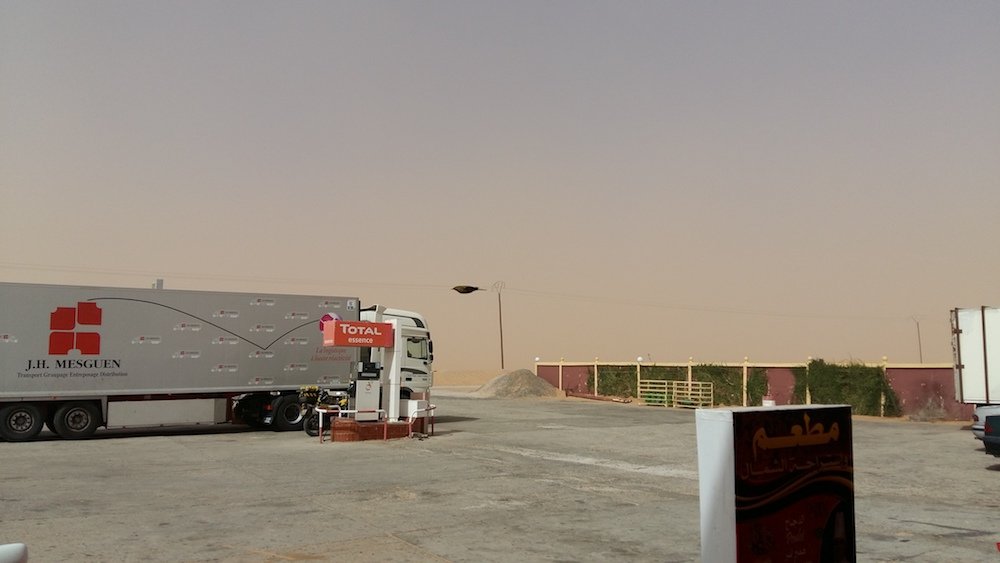 © João Sousa - Sandstorm on the way
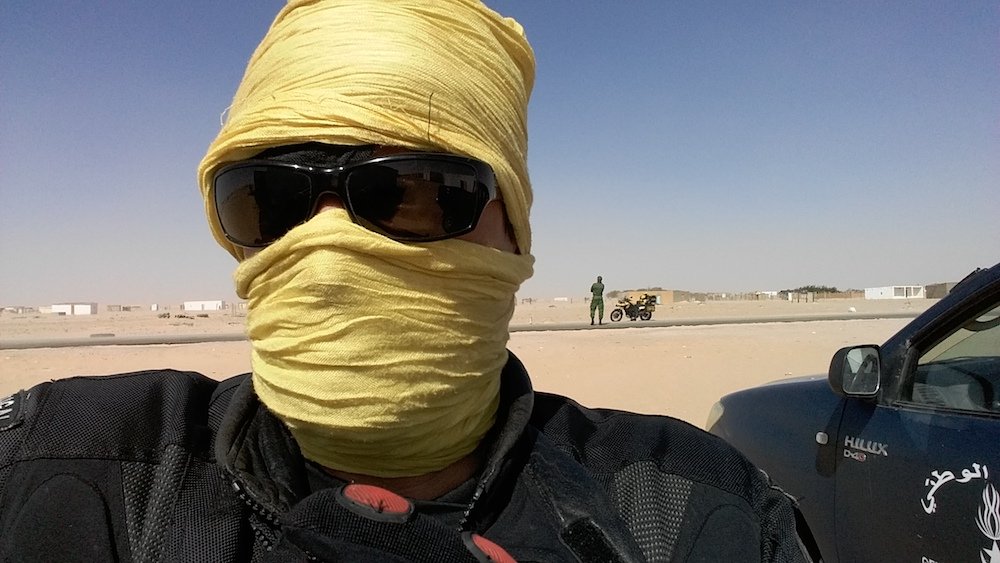 © João Sousa - With a sandstorm, you can’t afford to leave a single centimetre uncovered
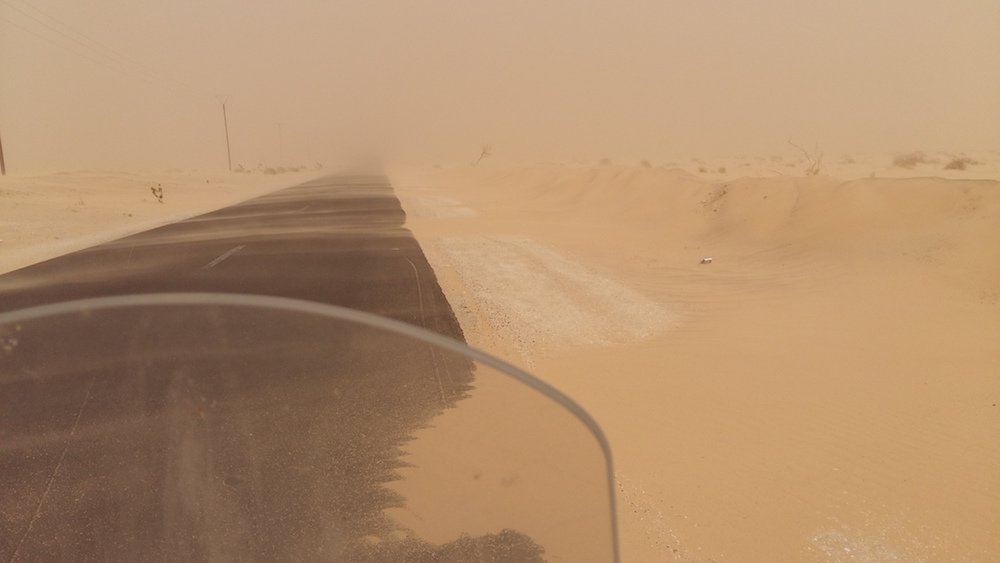 © João Sousa - The view inside the storm
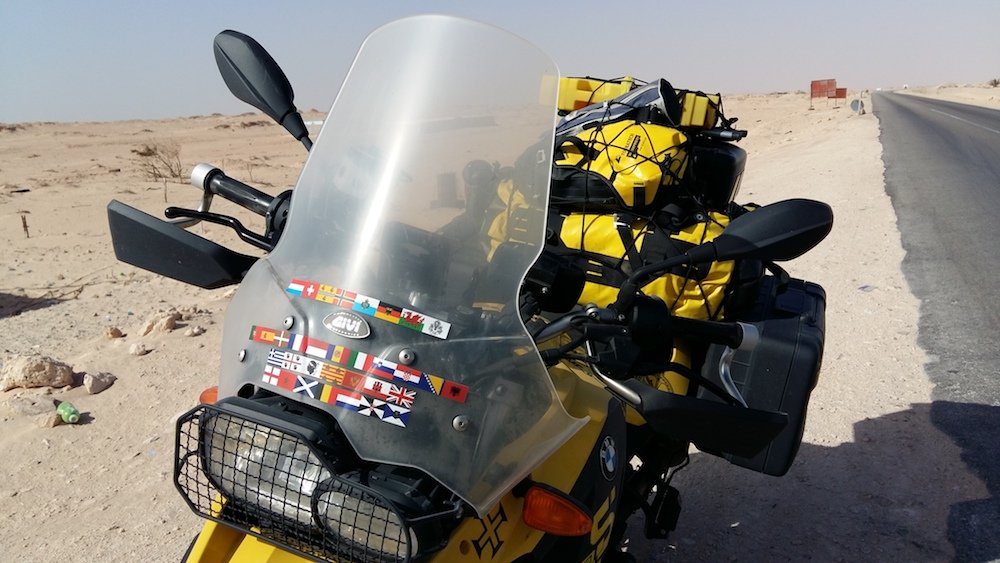 © João Sousa - Notice the difference with my screen following the sand storm
On my ascent after Nouakchott towards Nouadhibou I had the misfortune to get caught in a sandstorm. Adrenaline increased and heart rate shot up because traveling in those conditions was unpredictable and frightening. I was riding against the wind, the front was wheel wobbling, visibility was nil, the visor was dull and eyes stinging, the sand storm hit and would cover the road, it went from tarmac to sand and with this, there was the real possibility of a person getting lost in the desert.
Advertisement
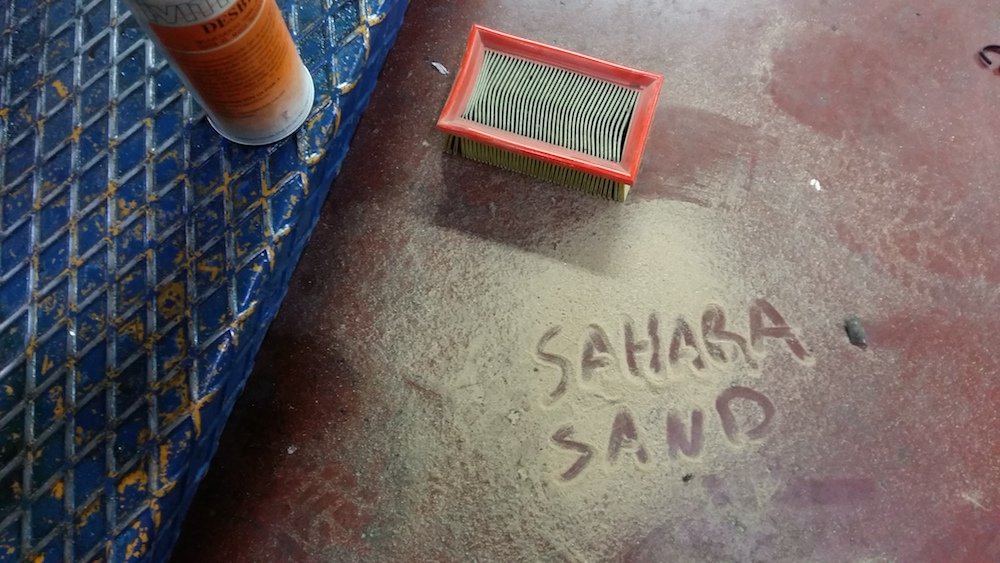 © João Sousa - A parting gift from the desert
This expedition, with temperature changes from -5° C to 45° C really challenged my levels of personal preparation, motorcycle and equipment preparation, not to mention the difficulties of the language and terrain I had to entertain. Would I do it again…?
Yes, João would. His next tour, Southern Africa Expedition 360 °, is currently being planned, on a bike named Mbuti Lilhaza (Blue Goat in the dialect Changana) a BMW F650GS. He’ll be riding through 9 African countries - Mozambique, Swaziland, Lesotho, South Africa, Namibia, Botswana, Zimbabwe, Zambia and Malawi - passing through savannah to the mountain ranges, desert to tropical forests, from the Indian Ocean to the Atlantic Ocean with Mbuti Lilhaza. We’ll be following him throughout his trip.
João is seeking sponsorship and equipment partners for his next challenge. Interested parties can contact him through his website at www.joaoaroundtheworld.com.
Advertisement
Related Posts


The Author